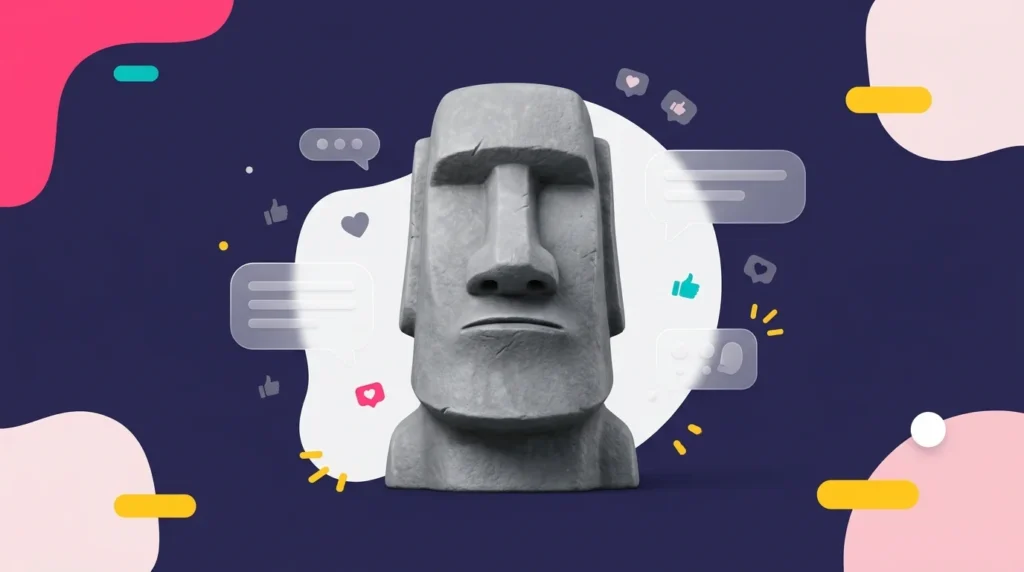
Have you ever received a 🗿 emoji in a text and wondered why someone sent you a stone face? Maybe your friend used it after a strange joke, or someone added it to a social media comment without saying anything else. Its meaning can seem confusing because this emoji often says more through humor and context than through words.
The moai emoji meaning usually relates to a stone statue, a serious or emotionless expression, or a funny reaction to an awkward situation. People also use it to show a calm, unbothered attitude or add a strange, deadpan touch to a message. In this guide, you’ll learn how to read the 🗿 emoji in texts, memes, friendships, and social media posts.
Key Takeaways
- 🗿 represents a stone head inspired by the famous moai statues of Rapa Nui.
- It often expresses a serious, emotionless, or stone-faced reaction.
- People use it in memes to make jokes feel awkward, dry, or absurd.
- It can suggest that someone is staying calm or acting unbothered.
- Its meaning may change with the conversation and the sender’s style.
- It does not automatically mean anger, rudeness, or romantic interest.
- You can use 🗿 alone or pair it with other emojis for humorous reactions.
What Does the 🗿 Moai Emoji Mean?
The 🗿 emoji shows a large stone head inspired by the moai statues of Rapa Nui, also known as Easter Island. These statues are known for their distinctive faces and serious expressions.
In digital conversations, people often use the emoji in ways that go beyond its literal meaning. Its most common uses include:
- A serious face: Showing little or no visible emotion.
- Deadpan humor: Reacting to a joke with a straight face.
- An awkward reaction: Responding to something strange or embarrassing.
- An unbothered attitude: Acting as if nothing can upset you.
- A meme reaction: Adding a funny, strange, or dramatic effect to a post.
The exact meaning depends on what happened before the emoji appeared.
1. A Serious or Emotionless Expression
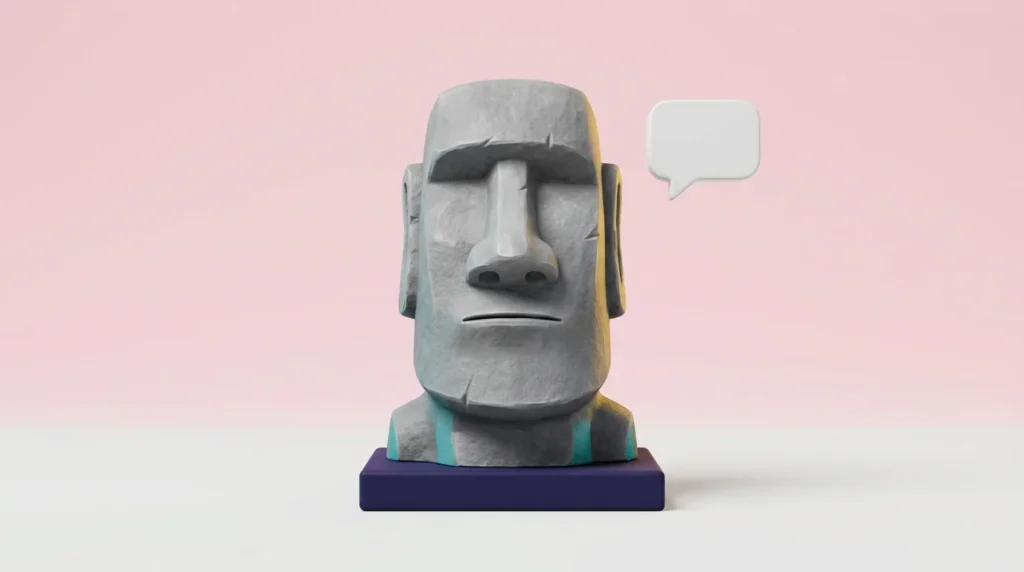
The stone face has a firm, almost emotionless look. That makes it useful when someone wants to react without showing much emotion.
EXAMPLE MESSAGE
Friend: “I told the teacher I forgot my homework again.”
You: “🗿”
MEANING: Your reply suggests a blank stare or a reaction of disbelief. It can mean you have no words for what your friend just said.
BEST USED FOR: Funny confessions, surprising news, or conversations where a plain reaction feels more amusing than a long reply.
2. Deadpan Humor and Sarcasm
Deadpan humor means saying or showing something funny without an obvious emotional reaction. The moai emoji works well for this style because its face looks serious.
EXAMPLE MESSAGE
Friend: “My plan was to wake up early, but I slept through my alarm.”
You: “Genius plan 🗿”
MEANING: You’re teasing your friend by responding with a serious-looking emoji. Depending on your relationship, it can feel playful rather than mean.
QUICK TIP: Use it with people who understand your humor. Without enough context, a sarcastic response can seem cold.
3. An Awkward or Unexpected Reaction
Sometimes people send 🗿 when a conversation becomes strange, uncomfortable, or difficult to answer.
EXAMPLE MESSAGE
Alex: “I waved at someone who wasn’t waving at me.”
Sam: “🗿”
MEANING: Sam is reacting to an awkward moment with a silent, stone-faced response. The humor comes from not needing to explain the embarrassment.
4. Staying Calm or Looking Unbothered
The emoji can also suggest that someone is calm, firm, or unwilling to react to drama.
EXAMPLE MESSAGE
“Everyone is arguing in the group chat, and I’m just here 🗿”
MEANING: The sender is showing that they are staying out of the drama or choosing not to react.
This does not always mean the person truly feels calm. They might simply be joking about the situation.
What Does the 🗿 Emoji Mean in Texting?
In texting, 🗿 often works as a short reaction instead of a full sentence. It can show that something is funny, awkward, unbelievable, or so strange that you do not know what to say.
Here are a few common texting situations.
| Texting Situation | Example | Likely Meaning |
|---|---|---|
| A friend tells a silly story | “🗿” | A blank or amused reaction |
| Someone makes a dry joke | “Very funny 🗿” | Deadpan humor or sarcasm |
| A person shares an embarrassing moment | “Bro 😭🗿” | Shock mixed with humor |
| Someone avoids online drama | “Not getting involved 🗿” | Staying unbothered |
| A friend says something unexpected | “What did I just read 🗿” | Disbelief or awkwardness |
The emoji can also replace a reaction such as “bruh,” “no words,” or “I’m done.” However, it does not always mean the same thing as those expressions.
Can 🗿 Mean “Bruh”?
Yes, it can serve a similar purpose in some conversations. Both can express disbelief, disappointment, or a reaction to something ridiculous.
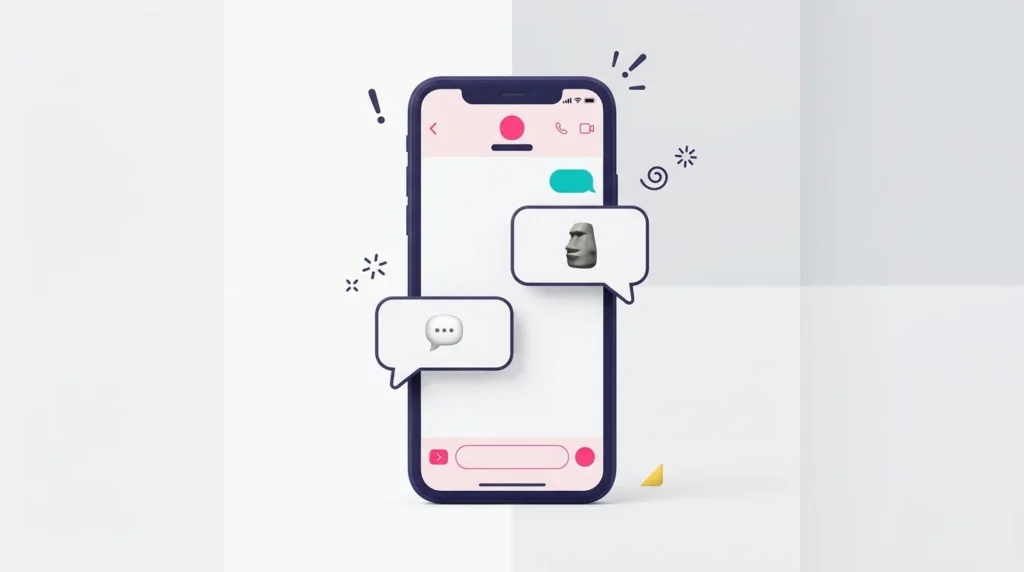
For example:
Friend: “I spent an hour looking for my phone while holding it.”
You: “Bruh 🗿”
Here, the words and emoji work together to show amused disbelief.
However, “bruh” is a word-based reaction, while 🗿 adds a visual sense of a blank, stone-faced response.
Does 🗿 Mean Someone Is Angry?
Not by itself. The emoji’s serious expression can look cold or stern, but people often use it for jokes rather than real anger.
Look at the surrounding messages before deciding how to read it. A laughing emoji, a silly story, or a familiar joking style may suggest humor. A tense conversation may give it a more serious tone.
What Does 🗿 Mean From a Guy or Girl?
The 🗿 emoji does not have a fixed meaning based on the sender’s gender. A guy or girl may use it to react to something funny, act unbothered, or make a dry joke.
When a Guy Sends 🗿
A guy might use it to:
- React to a strange or funny message.
- Tease a friend without writing a full sentence.
- Make a serious-looking joke.
- Show that he is not reacting strongly to something.
- Join a meme or group chat joke.
EXAMPLE MESSAGE
You: “I accidentally sent my shopping list to the class group.”
Him: “🗿”
POSSIBLE MEANING: He may find the situation awkward or funny and be reacting with a silent, stone-faced expression.
When a Girl Sends 🗿
A girl might use it to:
- React to an unexpected comment.
- Make a dry or sarcastic joke.
- Show disbelief without a long reply.
- Playfully respond to an embarrassing story.
- Express a calm or unbothered attitude.
EXAMPLE MESSAGE
You: “I forgot why I walked into the room.”
Her: “🗿”
POSSIBLE MEANING: She may be joking about the situation or sharing a blank, speechless reaction.
Does 🗿 Have a Romantic Meaning?
Usually, the emoji is a reaction or a meme rather than a romantic sign. Someone might send it during playful flirting, but the emoji alone cannot tell you whether they like you.
Pay more attention to the full conversation, how the person treats you, and whether they show interest in other ways.
What Does the 🗿 Emoji Mean on Social Media?
On social media, the moai emoji is often used as a reaction, a meme symbol, or a way to give a post a strange and serious tone.
1. In Memes
The stone face fits memes that rely on awkward silence, dry humor, or an expressionless reaction.
For example:
“Me after saying the most confusing thing in the room: 🗿”
The joke comes from the contrast between the strange comment and the calm, emotionless reaction.
2. In TikTok Comments
People may use 🗿 in a comment to react to an unusual video, a funny mistake, or a moment that leaves them speechless.
EXAMPLE COMMENT
“When you hear what your friend did last night 🗿”
The emoji adds a sense of disbelief without spelling out the reaction.
3. On Instagram
The emoji can appear in captions, comments, or messages to add a dry joke or a deliberately serious mood.
EXAMPLE CAPTION
“Me pretending I know what’s happening 🗿”
Here, it suggests that the person is keeping a straight face despite being confused.
4. In Gaming and Group Chats
Gamers and friends may use 🗿 after an unexpected move, a silly mistake, or a comment that makes no sense.
Its effect is often stronger when the group already shares the joke. A single emoji can then communicate a reaction that would take several words to explain.
How to Reply to the 🗿 Emoji
The best reply depends on why the other person sent it. You can joke back, ask what they mean, or keep the conversation going.
Here are five simple reply ideas.
| Your Situation | Possible Reply |
|---|---|
| They are joking with you | “Don’t judge me 😂” |
| They reacted to something strange | “I know, that was wild 😭” |
| You want to keep the joke going | “Stone-cold reaction 🗿” |
| You are unsure what they mean | “Wait, what does that mean? 😂” |
| They are staying out of drama | “Fair enough 😂” |
QUICK TIP: If the conversation is playful, a playful reply usually fits. If the emoji appears during a serious discussion, ask a clear question rather than assuming the sender is joking.
🗿 Emoji Combinations and Their Meanings
People often pair the moai emoji with other emojis to create a more specific reaction. These combinations do not have one official meaning, so the context still matters.
| Emoji Combination | Possible Meaning |
|---|---|
| 🗿😂 | A funny or ridiculous situation |
| 🗿😭 | Laughing, disbelief, or an awkward reaction |
| 🗿💀 | Something feels absurd or extremely funny |
| 🗿🤨 | Questioning something while keeping a serious face |
| 🗿🔥 | A bold, cool, or impressive moment, depending on context |
| 🗿😶 | Silence or a speechless reaction |
For example, 🗿😂 may make a joke feel more obvious, while 🗿😶 can emphasize silence. These are informal uses, and different people may read them differently.
🗿 vs. Similar Emojis: What’s the Difference?
Several emojis can express disbelief, silence, or a serious reaction. However, each has a slightly different look and common use.
| Emoji | Name | Common Use |
|---|---|---|
| 🗿 | Moai | Stone-faced reactions, dry humor, memes |
| 😐 | Neutral Face | A plain or emotionless reaction |
| 😶 | Face Without Mouth | Silence, speechlessness, or no comment |
| 💀 | Skull | Humor about something being extremely funny or shocking |
| 🤨 | Face With Raised Eyebrow | Doubt, suspicion, or questioning something |
🗿 vs. 😐
The 😐 emoji looks like a regular neutral face. It often communicates a straightforward lack of emotion.
The 🗿 emoji can feel more exaggerated or meme-like because it represents a stone statue. It may be used for a deliberately stiff or absurd reaction.
🗿 vs. 💀
The 💀 emoji often suggests that something is so funny, shocking, or embarrassing that the sender is figuratively “dead.”
The 🗿 emoji is more associated with a straight-faced response. Pairing the two can make a joke feel even more absurd.
🗿 vs. 😶
The 😶 emoji often suggests that someone has nothing to say. The moai emoji can communicate a similar idea, but it adds a stone-statue look that can make the reaction funnier.
🗿 Moai Emoji Copy and Paste
Want to use the moai emoji in your next message? Copy it from here:
🗿
You can paste it into text messages, social media comments, captions, gaming chats, or other apps that support emoji.
Here are a few ready-to-use examples:
- “No words 🗿”
- “That was unexpected 🗿”
- “I’m staying out of this 🗿”
- “Bro really said that 🗿”
- “Me trying to keep a straight face 🗿😂”
The emoji’s appearance may vary slightly between devices and platforms, but the basic stone-head design remains recognizable.
Frequently Asked Questions
1. What does the 🗿 emoji mean from a guy?
A guy may use it to show disbelief, react to a funny message, or make a dry joke. It does not have one fixed meaning based on gender, so read it in the context of your conversation.
2. Is the 🗿 emoji sarcastic?
It can be. People often use its serious-looking face to create a deadpan or sarcastic reaction. However, it can also be a simple meme response or a reference to a stone statue.
3. Does 🗿 mean someone is unbothered?
Sometimes. It can suggest that someone is staying calm or refusing to react to drama. In other cases, the sender may simply be making a joke about acting emotionless.
4. Why do people use 🗿 in memes?
Its stiff, stone-like expression works well for awkward situations, strange jokes, and exaggerated reactions. The humor often comes from using a completely serious face in a ridiculous situation.
5. Does the moai emoji have a romantic meaning?
It is not usually a romantic emoji. Someone could use it in a playful or flirty conversation, but it does not prove that they have romantic feelings.
6. Is 🗿 the same as the stone face emoji?
People often call it the stone face emoji because it shows a stone head. Its official name is Moai, referring to the statues of Rapa Nui.
7. What is the difference between 🗿 and 😐?
Both can show a neutral reaction, but 🗿 often has a more exaggerated or humorous feel. The 😐 emoji usually looks like a simple expressionless face.
8. Is it rude to send someone 🗿?
Not always. Friends may use it as a harmless joke or a funny reaction. In a serious conversation, though, it might come across as dismissive, so consider the situation before sending it.
Conclusion
The 🗿 moai emoji usually represents a stone-faced reaction, deadpan humor, disbelief, or an unbothered attitude. People use it in texts, memes, comments, and group chats when a serious-looking reaction feels funnier than a written reply. It can also refer to the stone statues that inspired its design.
The meaning depends on the person and the situation. A friend may use 🗿 to tease you, while another person may send it because they have nothing to say. A useful tip is to read the messages around the emoji before deciding what the sender means. That will help you respond in a way that fits the conversation.

Oliver Bennett is an emoji meanings writer at Emojiee.com. He writes simple, helpful guides about emoji meanings, texting expressions, heart emojis, and emoji combinations to help readers understand how emojis are used in everyday conversations, relationships, and social media.