

Have you ever seen someone react to a Facebook post with a smiling face hugging a red heart? You might wonder whether they are showing sympathy, friendship, affection, or romantic interest. The meaning can change depending on what the person shared and how you know them.
The care emoji meaning is usually linked to kindness, emotional support, sympathy, and affection. The Facebook Care reaction looks like a face hugging a heart and can feel like sending someone a virtual hug. This guide explains its meaning in texting and on social media, how people use it, how it differs from other reactions, and how to respond.
Key Takeaways
- The Facebook Care reaction shows care, warmth, and emotional support.
- It looks like a smiling face hugging a red heart.
- People often use it on personal, sad, or meaningful posts.
- It can show friendship or affection without implying romance.
- Its meaning depends on the post and your relationship with the sender.
- 🫶, 🤗, and ❤️ are useful alternatives in regular messages.
- Facebook’s Care reaction is different from a standard copy-and-paste emoji.
What Does the Care Emoji Mean?
The Facebook Care reaction represents compassion, concern, affection, and support. It lets someone respond to a post with a caring gesture instead of writing a full message.
Think of it as a small virtual hug. The person may be saying:
- I care about you.
- I’m thinking of you.
- I’m sorry you’re going through this.
- I’m happy for you.
- I’m sending you love and support.
The reaction does not have one fixed meaning. Someone might use it when a friend shares difficult news, while another person might use it on a sweet family photo.
The Facebook Care reaction is shown as a smiling face holding a red heart in an embrace.
1. Showing Care and Support
The most common meaning is a simple message of care. Someone may use the reaction to show that they noticed your post and want to offer support.
EXAMPLE MESSAGE
My first day at my new job was stressful, but I got through it.
REACTION: Care
MEANING: The person may be showing encouragement and letting you know they care about how your day went.
BEST USED FOR: Personal updates, stressful days, and messages that call for kindness.
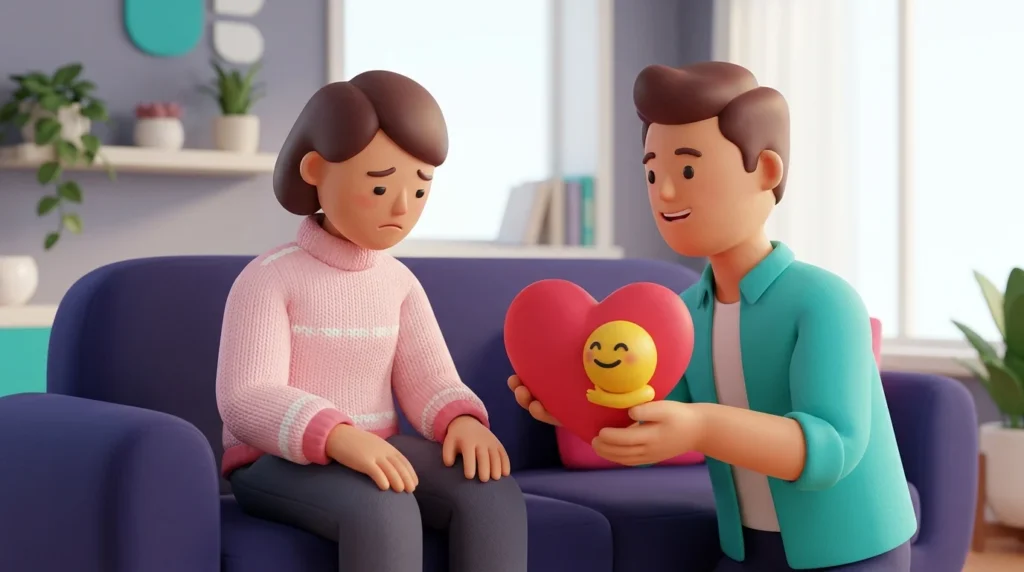
2. Expressing Sympathy
The Care reaction can be a gentle way to respond to sad or difficult news. It may show sympathy without asking the person to explain their feelings.
EXAMPLE MESSAGE
Our family lost someone very special to us today.
REACTION: Care
MEANING: The reaction can express sympathy and emotional support. It may mean the person is thinking of you during a difficult time.
BEST USED FOR: Loss, illness, family troubles, or other painful experiences.
3. Showing Love and Affection
Care can also express warmth toward friends, relatives, and people who matter to you.
EXAMPLE MESSAGE
Feeling thankful for my amazing family today.
REACTION: Care
MEANING: The person may be showing affection and appreciation for the family moment.
BEST USED FOR: Family pictures, friendship posts, and heartfelt updates.
4. Celebrating Someone’s Success
Care is not limited to sad news. Some people use it to celebrate a success or show that a happy moment matters to them.
EXAMPLE MESSAGE
After months of hard work, I finally passed my final exam!
REACTION: Care
MEANING: The person may be proud of you or happy to see your success.
BEST USED FOR: Achievements, personal milestones, and good news.
What Does the Care Emoji Mean in Texting?
People often search for the care emoji because they want to send a caring symbol in a text message. However, the Facebook Care reaction is a platform-specific reaction, not a standard Unicode emoji that works as a regular character everywhere.
In ordinary texts, people often choose similar emojis to express care.
| Emoji | Common meaning | Best use |
|---|---|---|
| 🫶 | Love, appreciation, support | Thanking someone or showing affection |
| 🤗 | Comfort, warmth, virtual hug | Supporting a friend |
| ❤️ | Love, affection, appreciation | Showing someone they matter |
| 🤍 | Gentle affection, warmth | Sending a soft, caring message |
| ❤️🩹 | Healing, recovery, support | Comforting someone during a hard time |
| 🥹 | Being touched, gratitude, strong emotion | Reacting to a kind or emotional message |
QUICK TIP: Choose the emoji that matches your message. A heart may show affection, while a hugging face may feel more comforting.
Example Conversations
Conversation 1: Supporting a friend
Mia: I’ve had a really difficult week.
Alex: I’m sorry. I’m here if you need to talk. 🤗
MEANING: Alex is offering comfort and support.
Conversation 2: Showing appreciation
Sam: Thank you for helping me move yesterday.
Taylor: Of course! Anytime 🫶
MEANING: Taylor is showing warmth and friendship.
Conversation 3: Celebrating good news
Jordan: I finally got the job!
Casey: That’s amazing! ❤️
MEANING: Casey is sharing excitement and affection.
What Does the Care Emoji Mean on Facebook?
On Facebook, the Care reaction is an option alongside reactions such as Like, Love, Haha, Wow, Sad, and Angry. It was introduced in 2020 as another way for people to show support.
Its hugging-heart design gives it a warmer feel than a simple Like. It can be useful when a post is personal or emotional and you want to acknowledge the person with kindness.
When Should You Use the Care Reaction?
Consider using it when someone:
- Shares difficult or upsetting news.
- Talks about stress or a personal challenge.
- Announces a meaningful family event.
- Reaches a goal after a hard period.
- Shares a heartfelt message.
- Needs encouragement or support.
You do not need to use Care only on sad posts. It can also express warmth on happy posts, depending on your relationship with the person.
Care vs. Like vs. Love
These reactions can all be positive, but they often carry different tones.
| Facebook reaction | Main message | Example situation |
|---|---|---|
| Like 👍 | I saw this or acknowledge it | A general update |
| Love ❤️ | I love or really appreciate this | A happy family photo |
| Care | I care and support you | A friend shares a personal struggle |
| Sad 😢 | This makes me sad | Someone shares painful news |
These are common uses, not strict rules. People have their own habits, so the same reaction may mean something slightly different from one person to another.
What Does the Care Emoji Mean From a Guy or Girl?
The Care reaction has no fixed meaning based on someone’s gender. A guy or girl may use it to show friendship, sympathy, appreciation, or affection.
When a Guy Sends the Care Reaction
A guy might use it to support you after a hard day, acknowledge personal news, or show that he appreciates you. If you are dating, it may also be one way to express affection.
However, the reaction alone does not prove that he likes you romantically.
When a Girl Sends the Care Reaction
A girl might use it to show kindness, comfort a friend, celebrate good news, or acknowledge something emotional. It can be a warm gesture without any romantic meaning.
Does the Care Emoji Mean Someone Likes You?
It might show that someone feels warmly toward you, but it is not enough to confirm romantic interest.
Look at the wider conversation. Does the person make an effort to talk with you, show interest in your life, and express affection in other ways? Those signs provide more context than a single reaction.
QUICK TIP: Treat the Care reaction as a friendly sign of support unless the wider conversation gives you a good reason to read it differently.
Is the Care Emoji Romantic or Friendly?
The Care reaction can be either friendly or affectionate. Its main message is care, rather than a clear statement of romantic love.
Here are a few ways the context can change its tone:
- Friendly: A classmate reacts to your post about passing an exam.
- Family affection: A relative reacts to a family picture.
- Emotional support: A friend reacts to your post about a difficult day.
- Possible romantic affection: Someone you are dating uses Care on a personal message.
Even in a romantic relationship, the reaction may simply show support. It is best to look at the person’s words and actions instead of guessing from one emoji.
How to Reply to the Care Emoji
You usually do not need to reply to a reaction. If you want to respond, keep it simple and match the situation.
If someone supports you:
- Thank you. I really appreciate it.
- That means a lot to me.
- Thanks for being so kind.
- I appreciate your support. ❤️
If someone reacts to happy news:
- Thank you! I’m so happy.
- Thanks for celebrating with me! 🫶
- I appreciate you!
If you want to send care back:
- Sending you a big hug. 🤗
- I’m here for you, too.
- Hope things get better soon. ❤️🩹
A short, honest reply is often enough. You do not need to make the conversation more serious than it is.
Similar Emojis That Show Care
If you want to send a caring message outside Facebook, these emojis can help you express the right feeling.
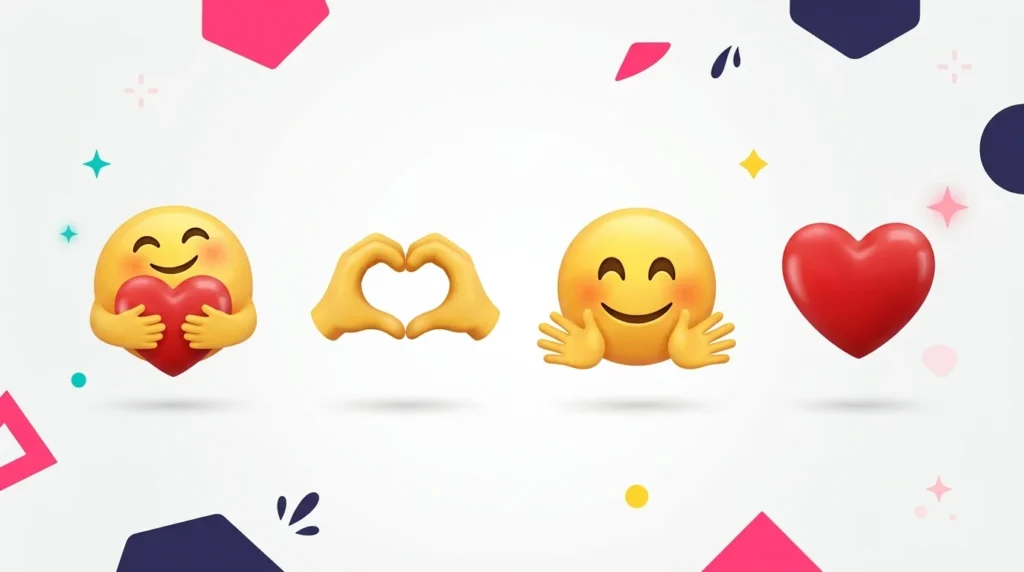
🫶
Heart Hands
Shows love, appreciation, and support. Use it to thank someone or show that you care about them.
🤗
Hugging Face
Suggests a warm hug, comfort, or friendliness. It is useful when a friend needs encouragement.
❤️
Red Heart
Expresses love, affection, or appreciation. Its meaning depends on the relationship and conversation.
❤️🩹
Mending Heart
Can represent healing, recovery, or support during an emotional struggle.
Can You Copy and Paste the Facebook Care Emoji?
The Facebook Care reaction cannot be copied and pasted as a single standard Unicode emoji in the same way as 🫶 or 🤗. It is a reaction built into Facebook’s platform.
You can copy these alternatives for regular messages:
Care and Support Emojis
🫶 🤗 ❤️ 🤍 ❤️🩹
Copy
Choose one or combine two to express warmth, love, comfort, or support.
Frequently Asked Questions
1. What is the main care emoji meaning?
The Care reaction usually expresses compassion, emotional support, affection, or sympathy. It can act like a virtual hug when someone shares personal or emotional news.
2. Is the Care reaction the same as the red heart emoji?
No. The Facebook Care reaction shows a face hugging a heart, while ❤️ is a standard red heart emoji. The Care reaction often has a stronger feeling of comfort or support.
3. Does the Care emoji mean love?
It can express affection, but it does not always mean romantic love. Friends, family members, and coworkers may use it to show kindness or support.
4. What does it mean if someone reacts with Care to my picture?
It may mean the person likes the picture, feels affection toward you, or wants to show warmth. The type of picture and your relationship with that person can help explain the reaction.
5. Is the Care emoji available on every messaging app?
The Facebook Care reaction is a platform-specific feature. Other messaging apps may offer their own reactions, but the exact Facebook Care reaction is not a standard Unicode character that can be pasted everywhere.
6. What is the best emoji to show care in a text?
🫶 is useful for love and support, while 🤗 can express comfort and a virtual hug. ❤️🩹 may suit messages about healing or recovery. Choose the one that fits the situation.
7. Should I reply when someone sends me a Care reaction?
A reply is optional. If you want to acknowledge the gesture, a simple thank-you or a kind emoji is enough.
8. Can the Care reaction be used on happy posts?
Yes. People may use it on happy announcements, family pictures, or personal achievements to show warmth and affection. Its meaning is shaped by the post and the person who uses it.
Conclusion
The care emoji meaning is mainly about showing support, kindness, sympathy, and affection. Facebook’s Care reaction uses a face hugging a heart to express these feelings. It can suit difficult news, happy updates, family moments, and friendly conversations.
The best way to read the Care reaction is to look at the message and your relationship with the person who sent it. Do not assume that it always means romance or sadness. If you want to send a similar message in a regular text, try 🫶 for support, 🤗 for comfort, or ❤️ for affection.

Oliver Bennett is an emoji meanings writer at Emojiee.com. He writes simple, helpful guides about emoji meanings, texting expressions, heart emojis, and emoji combinations to help readers understand how emojis are used in everyday conversations, relationships, and social media.